


Solar EPC · Egypt

Solar power, engineered from first survey to first kilowatt-hour.

Nourify designs, supplies and builds solar systems for farms, factories and buildings across Egypt: solar irrigation, on-grid, off-grid and hybrid.

100+ kW
of solar capacity delivered
≈180 MWh
of clean electricity a year*
≈80 t
of CO₂ emissions avoided a year*
10
skilled engineers on the team

*Estimates for 100 kWp of installed capacity, assuming 1,800 kWh generated per kWp a year and 0.45 kg of CO₂ for each kWh of grid electricity replaced. Actual results depend on site and design.

Who we are

An Egyptian solar company, led by its founders

Nourify designs, supplies and installs solar irrigation, on-grid, off-grid and hybrid systems, and stays with every plant after it is switched on.

  • A team of 10 skilled engineers
  • Design, supply and site execution handled in-house
  • Engineer-led supervision on every installation
  • Experience delivering projects above 100 kW

About us and our team

About us

The people behind Nourify

An Egyptian solar company, led by its founders and backed by a team of 10 skilled engineers.

A message from our CEO

Egypt has some of the best sunshine in the world, and energy costs that keep rising. We started Nourify to close that gap for the people who feel it most: farmers pumping water with diesel, factory owners watching their bills, and families living with power cuts.

We are engineers first. Every system we build starts with a site survey and an honest calculation of what it will produce and what it will save. If solar is the wrong answer for a site, we say so.

Our promise is simple. One team designs, supplies and installs your system, and the same team answers the phone after it is switched on. Judge us by how your plant performs years after handover.

Amr AbdelazizCo-founder and Chief Executive Officer, Nourify

Watch Amr's interview

Founding team

Amr Abdelaziz

Amr Abdelaziz

Co-founder, CEO and Business Development Director
Mostafa Mahmoud

Mostafa Mahmoud

Co-founder, Chief Operating Officer
Ahmed Darwish

Ahmed Darwish

Technical Support Engineer
Solutions

Four ways to run on sunlight

Every site has a different mix of grid access, load and budget. We size the system around how you actually use energy.

Solar irrigation

Solar pumping systems that lift water from wells and canals using daylight, replacing or cutting diesel on the farm.

  • Pump and array sizing from well depth, head and daily water demand
  • Submersible and surface pumps with solar pump drives
  • Works with drip, sprinkler and centre-pivot networks
  • Optional changeover to diesel or grid for night pumping
Best for: farms and land reclamation projects that pump with diesel today.
On-grid

Grid-connected systems that feed your loads first and work alongside the utility supply. No batteries, so the cost per kilowatt-hour is the lowest.

  • Rooftop, ground-mount and carport structures
  • String inverters with remote monitoring
  • Grid-connection studies and net-metering paperwork
  • Protection and metering to distribution company requirements
Best for: factories, commercial buildings and homes with a reliable grid connection.

Off-grid

Stand-alone systems with battery storage that supply power where there is no grid at all, day and night.

  • Solar array, battery bank and off-grid inverters sized to your load profile
  • Lithium battery storage with battery management
  • Optional generator input for long cloudy spells or peak loads
  • Load audit so storage is not oversized
Best for: remote farms, desert sites, telecom and facilities far from the network.

Hybrid

Solar, batteries and the grid or a diesel generator working as one system. You keep power during outages and burn less fuel.

  • Hybrid inverters that switch between solar, battery, grid and generator
  • Backup for critical loads during power cuts
  • Fuel-saver mode for sites that run on generators
  • Can be added to an existing on-grid system
Best for: sites with an unstable grid, or with generators they want to run less.
Products

The equipment we build with

We specify current-generation modules and drives from established manufacturers, matched to each site.

Solar modules

JA Solar

DeepBlue 5.0

up to 670 W
Efficiency
up to 24.8%
Cell technology
n-type TOPCon, 198 third-cut cells
Module build
Bifacial, double glass
Size
2,382 × 1,134 mm
JinkoSolar

Tiger Neo 3.0

650 to 670 W
Efficiency
up to 24.8%
Cell technology
n-type TOPCon, 85% bifaciality
Heat performance
−0.26% per °C
Size and weight
2,382 × 1,134 × 30 mm, 32.5 kg
Warranty
12 years product, 30 years power
JinkoSolar · newest

Tiger 5

700 W
Efficiency
25.91%
Cell technology
n-type TOPCon
Size
Same footprint as the 670 W module
Availability
On request

Pump drives and inverters

Veichi

SI23 solar pump inverter

0.75 to 710 kW
MPPT efficiency
up to 99.9%
Solar input
up to 780 V DC
Pump protection
Dry run, low power, full tank, overcurrent
Monitoring
GPRS remote monitoring, RS485
Delixi

CDI-SPD solar pump drive

0.4 to 110 kW
Solar input, 220 V models
200 to 400 V DC
Solar input, 380 V models
300 to 750 V DC
Pumps
Single-phase and three-phase
Output frequency
0 to 400 Hz
Delixi

CDI-E102 and CDI-E180 drives

up to 700 kW
CDI-E102
Economy series for standard pump duty
CDI-E180
High-performance series, 0.4 to 700 kW
Control
V/F and open-loop vector
Power supply
220, 380 or 690 V three-phase
Communication
RS485, Modbus RTU

Figures come from the manufacturers' published specifications. The exact model for your project is confirmed in the quotation. Product names belong to their manufacturers.

Calculator

Estimate your system in Egyptian pounds

Choose the type of station and its capacity to see an indicative budget, the energy it produces and what it saves.

Type of station
100 kW
Indicative budget EGP 1,500,000 – 1,800,000

Panels, inverters, mounting structure, cabling and installation. No batteries.

Budget per kWEGP 15,000 – 18,000
Solar energy a year180,000 kWh
Bill saving a yearEGP 450,000
Simple payback3.3 – 4.0 years
CO₂ avoided a year81 t

Indicative budgets in Egyptian pounds as of November 2026. Equipment prices move with the exchange rate, so your quotation sets the final price. Energy is estimated at 1,800 kWh per kW a year and CO₂ at 0.45 kg per kWh replaced.

Services

One team from first survey to after-sales support

Design and engineering

  • Site survey, shading and load analysis
  • Energy yield simulation and system sizing
  • Electrical single-line diagrams and protection design
  • Structural design for roofs and ground mounts
  • Feasibility and payback study

Supply

  • Modules, inverters, pumps and batteries from qualified manufacturers
  • Mounting structures, cabling and switchgear
  • Import, customs and delivery to site
  • Inspection of equipment before installation
  • Manufacturer warranties registered in your name

Installation and support

  • Civil works and structure installation
  • DC and AC electrical installation
  • Testing, commissioning and grid connection
  • Operator training and handover documents
  • Monitoring, maintenance and after-sales support
  1. SurveyWe visit the site, measure it and study your bills or fuel use.
  2. DesignWe size the system and simulate what it will generate.
  3. ProposalYou get a fixed scope, price and expected savings.
  4. SupplyWe order, ship and inspect every component.
  5. BuildOur engineers supervise installation on site.
  6. CommissionWe test, connect and switch the system on.
  7. Hand overYou receive drawings, warranties and training.
  8. MaintainWe monitor performance and service the plant.
Who we work with

Built for the sites that use the most energy

Agriculture

Solar pumping and farm power for wells, pivots, cold stores and packing houses.

Industry

Rooftop and ground-mount plants that cut daytime electricity costs for factories.

Commercial

Malls, schools, hospitals, hotels and offices, including carport systems.

Residential

Villas and compounds, with hybrid backup where the grid is unreliable.

Questions

Good to know before you start

Will an on-grid system keep working in a power cut?

No. On-grid inverters switch off when the grid goes down, to protect people working on the lines. If you need power during outages, choose a hybrid system with batteries.

Does a solar pump need batteries?

Usually not. The pump runs while the sun is up and the water is stored in a tank or goes straight to the field, which is cheaper than storing electricity. For night pumping we add a changeover to diesel or grid.

Which system is right for my site?

It depends on your grid connection and when you use energy. A reliable grid points to on-grid, no grid points to off-grid, and an unstable grid or a generator points to hybrid. We confirm it with a site survey.

What do you need from me for a quote?

Your location, recent electricity bills or diesel consumption, and for irrigation the well depth and daily water demand. We collect the rest during the survey.

Projects

Project experience

Work that members of our team took part in before founding Nourify.

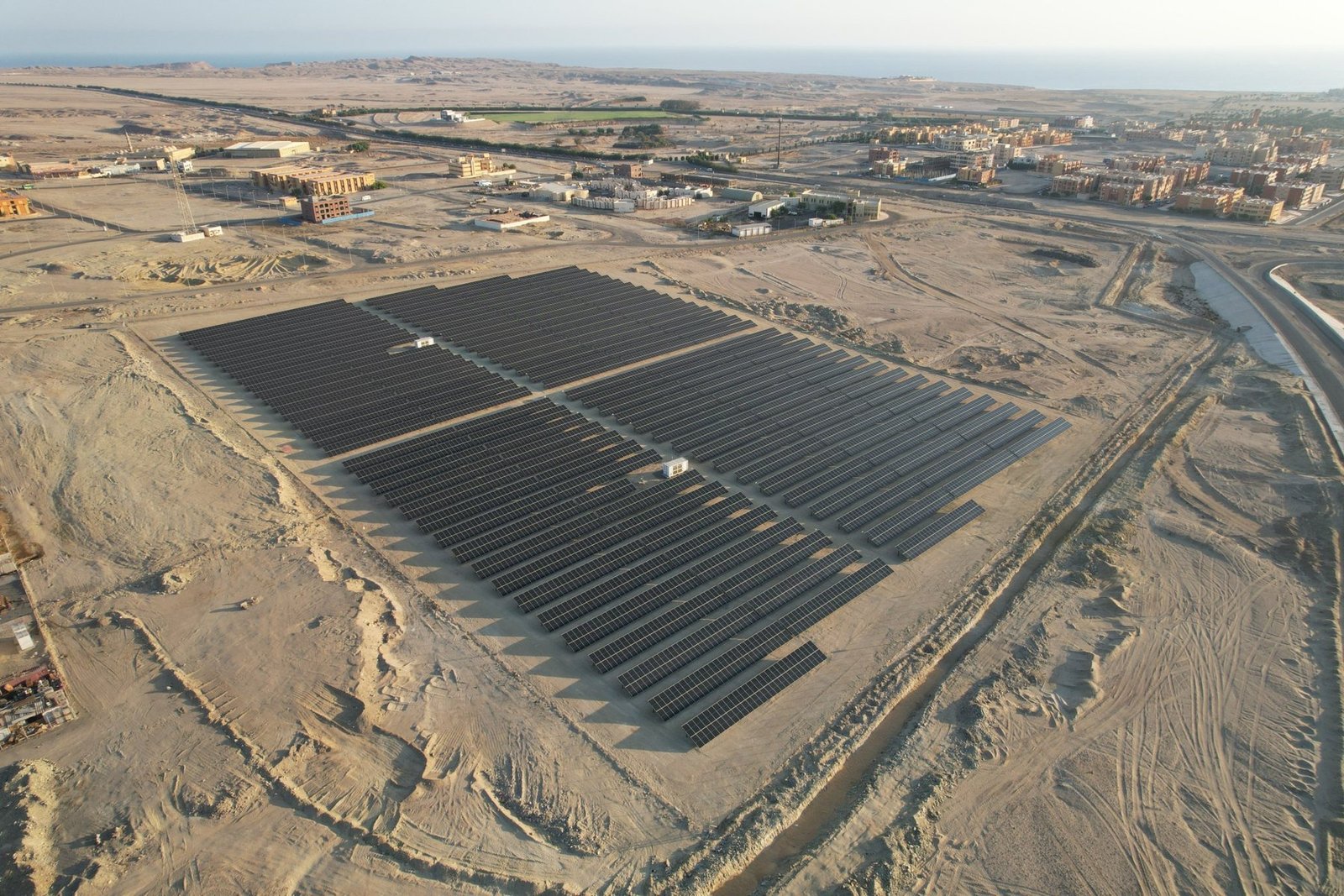
Aerial view of the ground-mounted solar plant at Port Ghalib
Team experience before Nourify

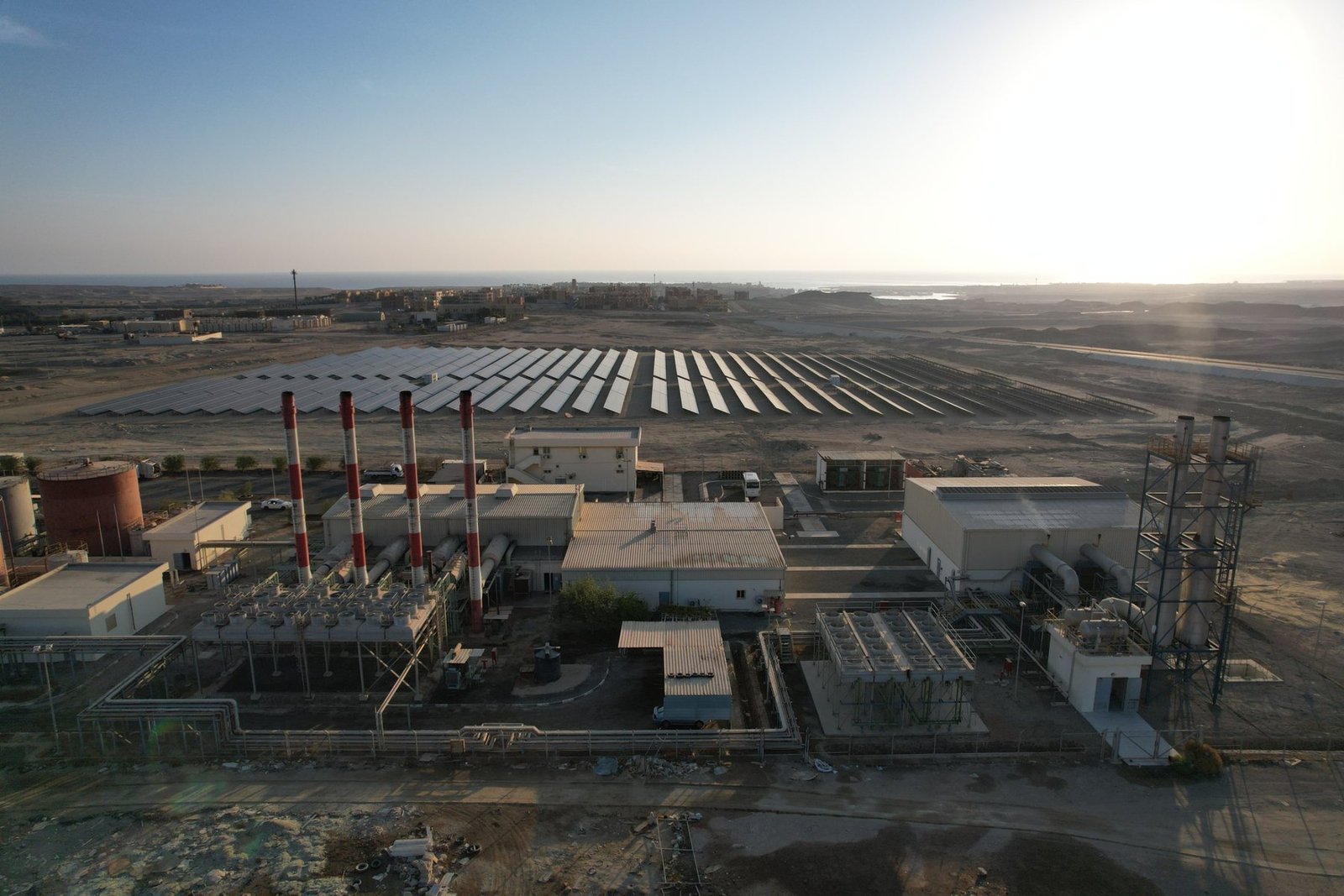
Port Ghalib solar plant

A ground-mounted solar plant on the Red Sea coast, built in the desert beside the town of Port Ghalib.

Location
Port Ghalib, Red Sea, Egypt
Capacity
5 MW
Type
Ground-mounted solar plant
The solar plant seen behind a neighbouring power station
Contact

Tell us about your site

Send a few details and an engineer will get back to you to arrange a survey.

Egypt
+2 01055667706
International
+1 302 662 4875
Email
info@nourifysolar.com